
Arizona Car Crash Handbook
Follow the first steps, keep vehicle and injury records straight, and prepare for insurer calls.

Call For A Free Consultation(602) 345-1818Free Case Review
 Fighting Suits,
Stories, animation and community. Created by Impact Legal.
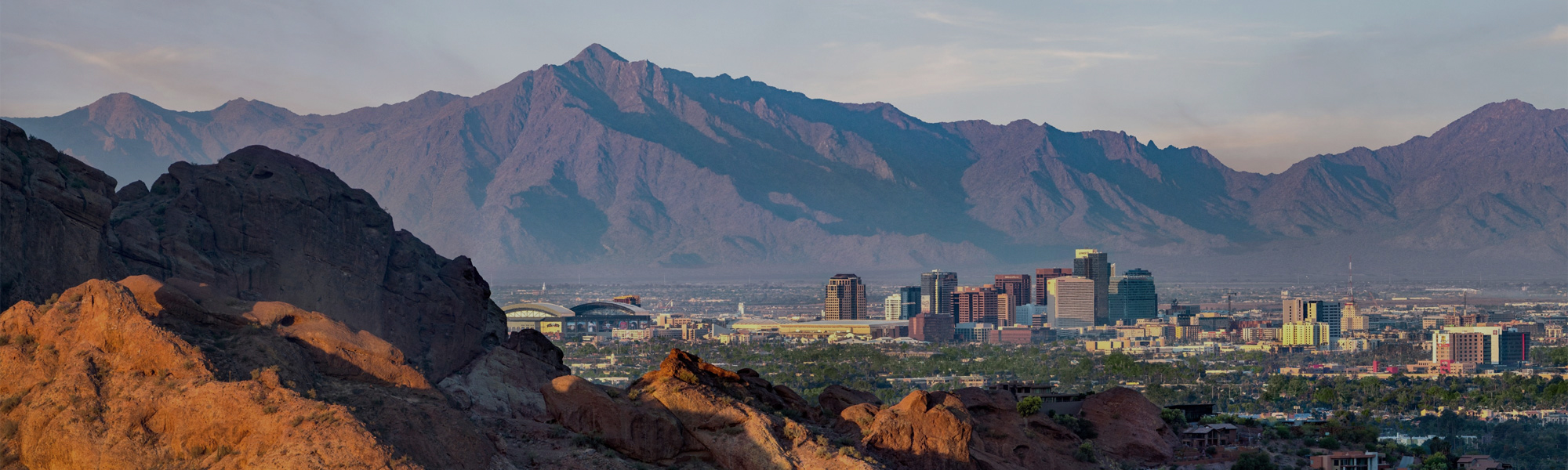
GLENDALE, ARIZONA
After a crash, your next step should feel clear. Tell us what happened. We’ll listen and explain your options.

A few details. A real conversation.
Tell us how to reach you and what happened.
Glendale, AZ Car Accident Lawyer
A crash on Loop 101 near 83rd Avenue or at 51st Ave and Camelback can upend your life in seconds. If you were hurt in a Glendale wreck, you are facing medical bills, a totaled vehicle, and an adjuster who is already building a file to pay you as little as possible. This page explains how Arizona fault law actually works in the West Valley, what to do in the hours and days after a Glendale collision, and how Impact Legal Car Accident Attorneys handles these cases from our Phoenix office about nine miles southeast.
Our Arizona fault and insurance guidance explains statewide car accident issues that may also affect a Glendale claim.
Related guidance: Glendale Personal Injury Lawyer.
Call (602) 345-1818, free case review, 24/7.
Glendale sits roughly nine miles northwest of downtown Phoenix and is home to about 250,000 people. It is crossed by Loop 101 (the Agua Fria Freeway), Loop 303, Grand Avenue (US-60), Glendale Avenue, and Bell Road. Heavy commuter volume, event surges at State Farm Stadium, and long surface-street corridors produce a predictable set of crash patterns.
51st Avenue and Camelback Road: For an intersection crash, preserve the signal phase, vehicle positions and witness observations.
Loop 101 through Glendale: A lane-change or merge collision requires evidence of vehicle movements, traffic conditions and the sequence of impacts. Identify the actual interchange and investigating agency.
On Bell Road or near Glendale Community College, the actual turning movements, signals and pedestrian paths may be relevant. Preserve the scene and available video.
State Farm Stadium events: Nearby events may help identify traffic-control plans, witnesses or video sources. An event date alone does not establish impairment or a higher crash rate.
If you were hit by a Glendale driver, the roadway and the circumstances matter. A Bell Road rear-end is a different case than a Loop 101 high-speed lane-change crash, and both are different from a post-event DUI collision near the stadium.
Not every Glendale crash looks the same. Fault theories, insurance angles, and evidence sources shift depending on the collision type. These are the case patterns we see most often in the West Valley:
Every one of these case types has its own evidence checklist. What we preserve in the first two weeks usually decides the settlement value eighteen months later.
In ordinary negligence cases, Arizona generally reduces damages by the injured person’s percentage of fault rather than applying a 50% or 51% cutoff. A.R.S. § 12-2505(A) contains an exception for a claimant who intentionally, wilfully or wantonly caused or contributed to the injury. A percentage example illustrates the calculation, not a promised recovery.
Arizona generally assigns each defendant its share of responsibility under A.R.S. § 12-2506. Statutory exceptions, including specified agency or servant relationships and acting in concert, can change that analysis. Identify all potentially responsible parties and the applicable exception before deciding who may owe which share.
For deeper coverage of Arizona fault law that applies statewide, see our Phoenix car accident practice and our detailed breakdown of Arizona’s comparative negligence rule.
The rule is easy to state and easy to underestimate. Here is what it looks like in practice.
Say you are stopped at 59th Avenue and Bell Road. Another driver runs the light and T-bones you. Your total damages, meaning medical bills, lost wages, vehicle damage, and pain and suffering, come to $100,000.
The math is straightforward. The fight is always about the percentage. Adjusters will use recorded statements, medical gaps, and social media to push your number up. Our job on the plaintiff side is to push it back down with the police report, witness statements, photographs, dashcam footage, and, when needed, an accident reconstructionist.
This is why “just being honest with the adjuster” costs Glendale drivers money every week. A 20% fault swing on a $150,000 case is $30,000.
Arizona jury instructions divide recoverable damages into three buckets. Understanding which bucket applies to which loss changes how you document your case.
Economic damages are the objectively measurable losses:
Non-economic damages are the human losses that don’t come with a receipt:
Punitive damages require more than ordinary or gross negligence. Arizona requires clear and convincing evidence of the defendant’s evil mind under the applicable case law, as explained in Swift Transportation v. Carman. Impairment, racing or other dangerous conduct may warrant investigation, but a label alone does not establish entitlement. Government defendants present additional restrictions.
Every case is different. Claim value depends on injury severity, treatment history, fault proof, available insurance, and how well damages are documented. We can walk you through which of these categories likely apply in your Glendale case during a free review.
The first hour sets the tone for your case. Do this in order:
For a more detailed checklist, see what to do after a car accident.
Arizona’s minimum auto liability limits, set by A.R.S. § 28-4009 for policies issued or renewed on or after July 1, 2020, are 25/50/15: $25,000 per person for bodily injury, $50,000 per accident total for bodily injury, and $15,000 in property damage.
Serious injuries can create losses above minimum liability limits. Compare the actual bills and other damages with the available policies rather than assume the cost of a particular hospital visit.
Arizona law requires specified written offers of uninsured and underinsured motorist coverage under A.R.S. § 20-259.01. Whether coverage applies depends on the policy, declarations, coverage selections, insured status and crash facts. Do not assume coverage exists solely because you cannot locate a signed rejection. We review the actual insurance documents and any question about the required offer.
UM coverage may provide benefits when the responsible driver is uninsured or cannot be identified, while UIM may apply when liability coverage is insufficient. Eligibility, proof, exclusions and limits depend on the actual policy and applicable law. Review all potentially applicable household and commercial policies before deciding that no recovery is available.
In serious injury cases we look at every available policy: the at-fault driver’s liability, your UM/UIM, resident-relative UM/UIM, and any commercial or umbrella coverage in play. Stacking theories and coverage arguments can materially change what your case is worth.
Many Arizona personal-injury lawsuits against private parties have a two-year filing period after the claim accrues under A.R.S. § 12-542. Accrual and exceptions require review of the specific claim. Continuing treatment or insurance negotiations do not by themselves extend the filing deadline.
When a crash may involve an Arizona public entity or public employee, check two separate deadlines. A notice of claim generally must be served on the proper recipient within 180 days after the claim accrues under A.R.S. § 12-821.01. A lawsuit generally must be filed within one year after accrual under A.R.S. § 12-821. Accrual depends on the facts, and exceptions, including the delayed-accrual provision for a required administrative or dispute-resolution process in A.R.S. § 12-821.01 subsection (C), and subsection (D)’s separate rule for a person who is a minor, insane, or incompetent, can affect the calculation. Do not assume the ordinary two-year personal-injury period applies.
If your crash involved a Glendale police vehicle, a city garbage truck, a malfunctioning signal, or a Valley Metro bus, seek legal review promptly. Identify the responsible entity and the applicable notice and lawsuit deadlines. Do not assume negotiations extend either deadline.
Impact Legal Car Accident Attorneys is a Phoenix-based firm led by attorney Jared J. Pehrson, licensed in Arizona. We do not operate a physical office in Glendale, but our Phoenix location sits roughly nine miles from the Glendale city limit, and we handle West Valley cases regularly.
We work cases on contingency. No attorney’s fees unless we recover. Case-cost handling is spelled out in the written fee agreement.
We also serve clients injured in nearby West Valley cities including Peoria, Surprise, Goodyear, and Avondale.
Call (602) 345-1818, free case review, 24/7.
Municipal traffic proceedings and a civil injury claim are separate. A civil case may belong in a justice court or Superior Court depending on the amount and jurisdictional rules; Arizona justice courts generally handle civil actions involving $10,000 or less, excluding specified amounts. A negligence lawsuit ordinarily names the responsible person or entity, while insurance may fund the defense or payment. The proper parties and venue require review.
Loop 101 is a state highway, so the Arizona Department of Public Safety (DPS) works those crashes, not Glendale PD. Your accident report comes from DPS. Liability theories on Loop 101 often involve high-speed lane changes, following-too-close rear-ends, and commercial vehicle weaving near the 83rd Avenue and Bell Road interchanges.
Call the Glendale Police non-emergency line at (623) 930-3000 and request records. You will usually need the report number, the date of the crash, and the names of the drivers. Reports typically become available several business days after the incident. If DPS responded because the crash was on Loop 101, you request the report from DPS, not the city.
Treatment at Banner Thunderbird does not by itself determine the strength or value of a claim. Preserve discharge instructions, imaging and bills from every treating provider. Impact Legal has no partnership or referral arrangement with Banner Thunderbird. The medical records and actual care needs matter.
A stadium event may affect traffic or available witnesses and video, but it does not establish fault. Investigate the actual collision. Any punitive-damages or alcohol-provider claim requires its own evidence and legal analysis. Request relevant footage promptly; retention periods vary.
For many personal-injury claims against private parties, A.R.S. § 12-542 generally provides two years after the claim accrues. Claims against an Arizona public entity or public employee generally require a notice of claim within 180 days after accrual under A.R.S. § 12-821.01 and a lawsuit within one year after accrual under A.R.S. § 12-821. Public-claim exceptions include the delayed-accrual provision for a required administrative or dispute-resolution process in A.R.S. § 12-821.01 subsection (C), and subsection (D)’s separate rule for a person who is a minor, insane, or incompetent. Other accrual or tolling issues require review of the specific claim.
In ordinary negligence cases, a share of fault generally reduces damages rather than automatically preventing recovery. See the comparative-fault section for the statutory exception and calculation limits.
UIM may apply when liability coverage is insufficient, depending on the actual policy and applicable law. See the UM/UIM coverage section for eligibility, proof, exclusions, limits and other potentially applicable policies.
We handle car accident cases on a contingency-fee basis. No attorney’s fees unless we recover on your case. The exact percentage and how case costs (things like filing fees, medical record charges, and expert witness fees) are handled is spelled out in a written fee agreement before we take the case. There is no charge for the initial case review.
Use these Arizona guides to organize records and understand the questions that come after a car crash. Read online or download a free PDF. Follow the first steps, keep vehicle and injury records straight, and prepare for insurer calls. Review repairs, rental costs, total-loss offers and release questions. Keep vehicle contacts, valuation evidence and unresolved issues organized. Match bills with benefit statements, record payments, and check claimed balances or repayments. Read a fictional declarations page, then locate the policy terms behind the numbers. Short practical companions: One Crash. Two Claim Files. · Get the Photos That Matter · Who Pays This Bill?. Also useful: Your Settlement Statement, Explained. Browse all guides.
Free guides for your next step
Arizona Car Crash Handbook

Your Car. Your Claim.

Medical Bills After a Crash

Read Your Insurance Policy
If you or a family member was hurt in a Glendale crash, call before you talk to the other driver’s insurance company. A case review costs nothing and takes about fifteen minutes.
Call (602) 345-1818, 24/7, free and confidential.
Impact Legal Car Accident Attorneys serves Glendale, Peoria, Surprise, Goodyear, Avondale, and the greater Phoenix metro from our Phoenix office.