

Self driving technology is becoming more visible on Phoenix streets. You see test vehicles, rideshare shuttles, and personal cars that promise advanced driver assistance. When one of these vehicles is involved in a crash, though, the impact on your life is anything but futuristic. You may be facing painful injuries, a damaged vehicle, time away from work, and a long list of questions about who is responsible.
Impact Legal Car Accident Attorneys focuses on representing injured people in Phoenix and across Arizona. Our firm understands both traditional auto collisions and newer issues that surround autonomous and semi-autonomous vehicles. When you work with us, you get a Phoenix self driving car accident lawyer who knows how these cases unfold, how insurers think, and what it takes to pursue fair results for you and your family.
Local Insight into Phoenix Roads and Autonomous Testing
Phoenix has become a hub for autonomous vehicle testing. Waymo and other companies have used city streets and nearby highways to develop their systems. That means local drivers, cyclists, and pedestrians are sharing space with vehicles that rely heavily on sensors and code.
Our legal team understands:
- Common locations where self-driving vehicles operate in and around Phoenix
- How desert light, weather, and road conditions can affect sensor performance
- How sudden braking, odd lane changes, or unexpected stops by automated vehicles can trigger multi vehicle collisions
This local perspective helps us frame your case within the real conditions you faced on the road. It also allows us to explain those conditions to adjusters, judges, and juries who may not realize how quickly traffic can change in Phoenix neighborhoods and on the freeways that surround the city.
If you were hurt in a crash involving a self-driving car, you do not have to guess about your options. Reach out to Impact Legal Car Accident Attorneys today to schedule a free consultation with a Phoenix self driving car accident lawyer. We are ready to review your situation, explain your rights, and help you move forward with a plan that fits your needs.
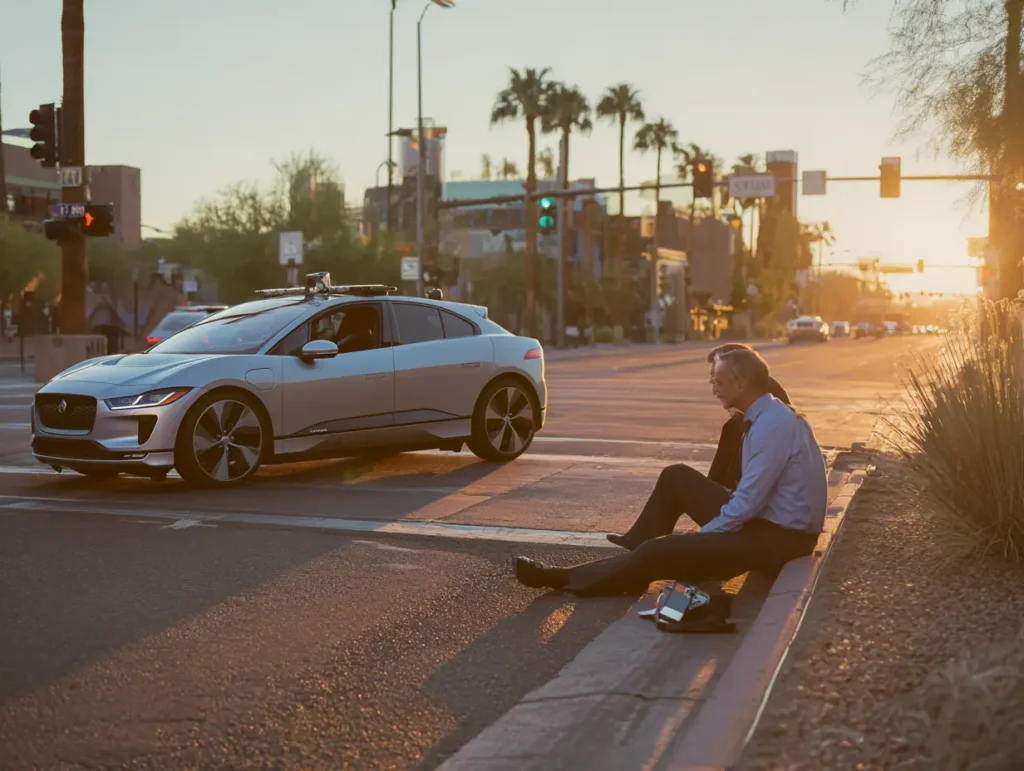
How Self-Driving Technology Affects Safety on Arizona Roads
Self driving vehicles rely on a blend of hardware and software that has to function correctly every second they are in motion. Cameras, radar, lidar, GPS, and detailed digital maps feed information into complex programs that decide how fast to travel, when to brake, and how to react to surrounding traffic. In theory, these systems should reduce collisions caused by tired, distracted, or impaired drivers. In real life, especially on Phoenix roads, things are not always that simple.
How Autonomous Systems Are Supposed to Work
Most self driving vehicles and advanced driver assistance systems follow a similar pattern:
- Sensors detect other vehicles, pedestrians, cyclists, and obstacles
- Software predicts how those objects will move
- The system decides whether to brake, steer, or maintain course
- The vehicle carries out those commands through its controls
When everything lines up, the ride can feel smooth and uneventful. But the second any part of that chain breaks down, the risk of a crash increases. A camera might mistake a person for a shadow. A radar unit might struggle with reflective surfaces. A program might not recognize a temporary construction pattern that does not match the map data. Those small errors can have serious consequences on a busy Phoenix street.
Arizona Road Conditions Challenge Self Driving Tech
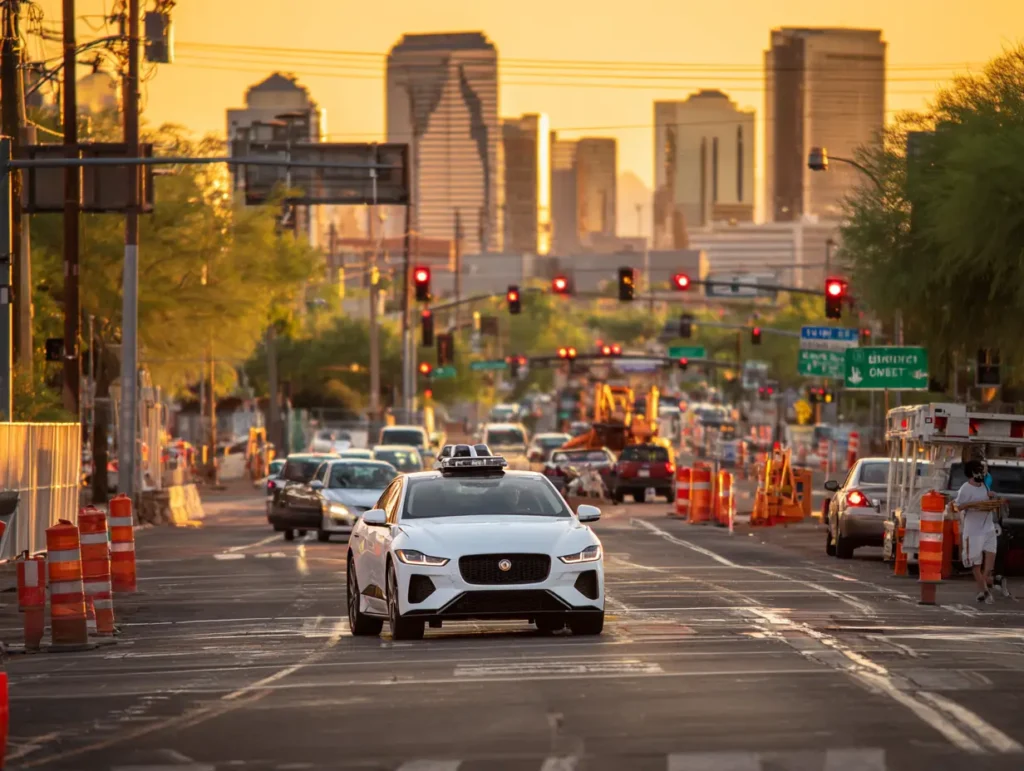
Phoenix and surrounding areas create unique conditions for autonomous vehicles. The bright desert sun can cause strong glare that affects cameras. Sudden dust, monsoon rain, or standing water can interfere with sensors. Construction zones, lane closures, and unmarked detours show up frequently as the city grows.
Human drivers instinctively adjust by slowing down, watching workers, and making eye contact with others on the road. A self-driving system has to rely entirely on what its sensors and programs can interpret. If those tools misread a temporary sign or fail to detect a lane shift, the vehicle may drift, stop in an odd place, or cut across traffic in a way that surprises everyone nearby.
Phoenix traffic patterns also present challenges. Fast freeway merges, frequent lane changes, and drivers entering from side streets can confuse systems that have not been trained for that level of unpredictability. When an autonomous car responds in an unusual or delayed way, other motorists may not have enough time or space to react, which can lead to chain reaction crashes.
The Human Factor Is Still Important
Even with advanced automation, most vehicles still involve human responsibility. A safety driver may be expected to watch the road and take over if something does not look right. A person in a privately owned car may treat advanced features as a substitute for attentive driving instead of as assistance.
Common human issues include:
- Overconfidence in automated features
- Looking at a phone or other distractions while the system is active
- Slow reaction when the car suddenly hands control back to the driver
- Misunderstanding what the vehicle can and cannot do
In many self driving car accidents, both human decisions and technological performance play a role. A Phoenix self-driving car accident lawyer must review how the person behaved and how the system operated in the moments leading up to the collision.
Data from Self Driving Systems Can Shape Your Case
One difference between a traditional crash and an accident involving a self driving vehicle is the amount of digital information these cars collect. Many autonomous vehicles record:
- Speed, braking, and steering inputs second by second
- Sensor readings that show what the system “saw”
- Whether automated driving was active and for how long
- Any warnings, error codes, or system handoffs
This data can reveal whether the vehicle detected a hazard, how quickly it reacted, and whether the system worked as designed. It may also shed light on software defects, poor maintenance, or careless monitoring by the company that operates the fleet.
Impact Legal Car Accident Attorneys understands how important this technical information can be for an injury claim. Our team knows how to push for preservation of data, involve qualified experts when needed, and translate complex records into clear explanations that support your story.
Why Understanding the Technology Matters for Your Claim
Insurance companies and autonomous vehicle companies often argue that their systems performed properly or that another driver caused the problem. When your legal team understands both the human side and the technical side of a self driving crash, it becomes easier to challenge those arguments.
A Phoenix self-driving car accident lawyer from Impact Legal can connect the dots between:
- Road and weather conditions at the time of the crash
- How the automated features should have behaved
- What actually appears in the data and witness accounts
- How those choices and failures led to your injuries
That combination of real world experience and familiarity with self-driving technology helps level the playing field against large corporations and insurers.
Common Causes of Phoenix Self-Driving Car Accidents
No two crashes look exactly the same, but many self driving car accidents in Phoenix follow familiar patterns. Understanding how these collisions happen helps show who may be responsible and what kind of evidence your lawyer needs to collect. In many situations, the cause is not just one bad decision or one malfunction. Instead, it is a combination of human behavior, technology issues, and corporate choices that together create an unsafe situation on the road.
Human Behavior in and around Self-Driving Cars
Even with advanced automation, people still matter. Many vehicles on Phoenix roads use driver assistance features rather than full autonomy. Others operate in autonomous mode but still have a safety driver or occupant who should stay alert. When people place too much trust in the technology, they often lower their guard in ways that increase crash risk.
Common human factors include:
- Distracted safety drivers: A safety driver may scroll a phone, check messages, or look away from the road while the vehicle is in autonomous mode. When something unexpected happens, that person may not have enough time to take control and prevent a collision.
- Misunderstanding system limits: Some drivers believe their car can handle every situation on its own. They might treat the vehicle like a full robot taxi when the system is only meant to assist. This misunderstanding can lead to speeding, tailgating, or letting the car handle complicated intersections without proper oversight.
- Aggressive nearby drivers: Other motorists sometimes react oddly to self-driving vehicles. They may cut in front of them, brake suddenly, or try to “test” how the autonomous car will respond. These risky moves can cause chain reaction crashes, especially in dense Phoenix traffic.
Technology and Software Issues
Self driving vehicles depend on a complex mix of hardware and software that must work correctly together. When any piece of that system fails, the car may make unsafe choices.
Examples of technology related causes include:
- Sensor errors or blind spots: Cameras, radar, and lidar can struggle with heavy glare, darkness, or weather. If the system fails to detect a pedestrian, cyclist, or stopped car, it may not slow down or change lanes in time.
- Flawed object recognition: The software may mislabel objects or fail to recognize unusual shapes. A vehicle might treat a person with a bicycle as a static sign, or misread a temporary construction barrier, leading to sudden swerves or hard braking.
- Mapping and localization problems: Many autonomous systems rely on highly detailed maps. When road layouts change due to construction or new development, the car may not understand where it is. That confusion can cause unsafe lane changes or turns in Phoenix neighborhoods that have recently grown.
- Unfinished or poorly tested updates: Companies routinely push software updates to their fleets. If an update has not been tested under realistic Arizona driving conditions, new problems can appear without warning.
Corporate and Operational Decisions
Behind each self-driving vehicle is at least one company that made decisions about training, safety protocols, and maintenance schedules. Those choices can directly influence how likely a crash becomes.
Some frequent corporate level causes are:
- Inadequate training for safety drivers or remote operators: When people who monitor autonomous vehicles are not properly trained, they may not know when to intervene or how to handle emergencies.
- Pressure to keep vehicles in service: Companies have an incentive to keep cars on the road, even when there are questions about performance. A vehicle that should be inspected or removed from service might continue running in Phoenix traffic, increasing the risk of harm.
- Weak safety policies and oversight: If a company does not have strong rules about how and where its vehicles operate, drivers and operators may take shortcuts. Lack of oversight can also hide repeated problems with a particular model or software version.
Road Conditions and Infrastructure
Sometimes the environment plays a part. Potholes, faded lane markings, and confusing signs can challenge human drivers and automated systems alike. Self-driving vehicles may react in unusual ways to:
- Sudden lane shifts in work zones
- Intersections with unclear right of way
- Poorly marked crosswalks near schools, parks, or bus stops
When a public agency or construction company fails to keep roads reasonably safe, that may factor into the legal analysis, although special rules and deadlines often apply to those claims.
Why Cause Matters for Your Legal Claim
Identifying what caused a self-driving car accident is not just a technical exercise. It shapes who can be held responsible and what compensation may be available. A Phoenix self-driving car accident lawyer from Impact Legal looks closely at:
- The actions of each human driver involved
- How the autonomous system functioned in the moments before impact
- What choices the operating company and manufacturers made
- How road conditions contributed to the collision
By tracing the real causes of the crash, your lawyer can build a case that reflects the full truth of what happened and how it changed your life.
Common Injuries in Self-Driving Car Accidents
A collision involving a self-driving car can leave you with injuries that affect every part of daily life. Some people walk away thinking they are only “shaken up,” then notice serious pain days or weeks later. Others suffer immediate trauma that requires surgery, long hospital stays, or months of rehabilitation. No matter where you fall on that spectrum, you deserve to understand how your injuries connect to your legal rights and potential compensation what damages can you recover after a car accident.
Impact Legal Car Accident Attorneys represents people in Phoenix who are dealing with both visible and invisible harm after serious crashes.
Traumatic Brain and Head Injuries
Head injuries are common in any car accident, and self-driving collisions are no exception. Sudden stops, odd impact angles, and side impacts from unexpected maneuvers can all send your head into a window, headrest, steering wheel, or airbag.
Common outcomes include:
- Concussions that cause headaches, nausea, dizziness, and light sensitivity
- Traumatic brain injuries that affect memory, concentration, mood, and sleep
- Ringing in the ears or changes in vision
- Emotional changes such as irritability, anxiety, and depression
Even a “mild” concussion can disrupt work, school, and relationships. Some people feel foggy, struggle to multitask, or tire easily for months. These effects are very real and can support a claim for damages when properly documented and presented.
Neck, Back, and Spinal Injuries
The sudden forces in a self-driving car accident can twist and compress the neck and back in ways the body is not built to handle. Victims may face:
- Whiplash and soft tissue strains in the neck and upper back
- Herniated or bulging discs that cause shooting pain, numbness, or tingling
- Spinal fractures
- Spinal cord injuries that result in partial or total loss of movement or sensation
Back and neck injuries often require imaging, specialist visits, injections, or surgery. Even when surgery is not needed, long-term physical therapy and pain management can create ongoing costs. These conditions may also limit your ability to stand, lift, bend, or sit for extended periods, which can affect your job and household responsibilities.
Broken Bones and Orthopedic Injuries
When a self driving vehicle stops abruptly or is struck from the side, arms, legs, ribs, and hips are particularly vulnerable. Injuries may include:
- Fractured wrists, arms, or shoulders from bracing during impact
- Broken ribs that make breathing and sleeping painful
- Leg and ankle fractures that require surgery and hardware
- Pelvic fractures that limit mobility and independence
These injuries often keep people out of work for weeks or months. They can also lead to long-term stiffness, arthritis, and reduced strength, all of which are important when calculating damages.
Internal Injuries and Soft-Tissue Damage
Not every serious injury is visible on the surface. Some crash victims suffer:
- Internal bleeding or organ damage
- Deep muscle bruising
- Torn ligaments and tendons
These issues may not appear right away but can become life-threatening without prompt care. That is why medical evaluation is so important after any collision involving a self-driving car, even if you think you are okay at first.
Emotional Trauma and Psychological Harm
Self-driving car accidents can shake your sense of safety in powerful ways. Many clients describe:
- Flashbacks or intrusive memories of the crash
- Trouble sleeping or nightmares
- Heightened anxiety while riding in cars or near traffic
- Feelings of anger, sadness, or helplessness
Conditions such as post traumatic stress disorder (PTSD), depression, and anxiety can be just as disruptive as broken bones. Therapy, medication, and time away from work may all be part of recovery. These losses deserve attention in any settlement demand or lawsuit.
Connecting Your Injuries to Compensation
In Arizona, people injured in car accidents can seek compensation for medical bills, lost wages, future loss of earning capacity, pain and suffering, and other losses that flow from the crash.
A Phoenix self-driving car accident lawyer from Impact Legal reviews how your injuries affect every part of your life, then works to present that story in a way insurers and courts cannot ignore. That includes looking at:
- The cost of past and future medical care
- How long you were away from work and whether you can return to the same role
- The impact of lasting pain, scarring, or disability
- The emotional toll on you and your family
When your injuries are clearly documented and carefully explained, it becomes easier to pursue a settlement or verdict that reflects what you are truly facing after a self-driving car accident in Phoenix.

Who May Be Liable for a Self-Driving Car Accident
Liability is often the hardest part of a self-driving car accident case. In a typical crash, fault may focus on one careless driver. When automated systems are involved, that same collision might involve a human safety driver, the company that owns the vehicle, the manufacturer, the software developers, and even a government entity that designed or maintained the road.
Sorting out responsibility determines who must pay for your medical bills, lost income, and other losses. A Phoenix self-driving car accident lawyer from Impact Legal looks beyond the surface and examines every party that may have played a part in what happened.
The Human Safety Driver or Vehicle Operator
Many self-driving cars still include someone who is supposed to monitor the vehicle and take over if something goes wrong. In other situations, private owners use advanced driver assistance systems on personal vehicles. That person can be responsible when they:
- Ignore instructions to stay alert and keep hands near the wheel
- Use a phone, watch videos, or become distracted while automation is active
- React too slowly when the system signals that they must take control
- Misuse features in situations that are outside the intended design
If a reasonable person would have stepped in and prevented the crash, the safety driver or vehicle operator may carry a significant share of the blame.
The Company That Owns or Operates the Self-Driving Fleet
When a rideshare, delivery, or technology company operates a fleet of autonomous vehicles around Phoenix, its decisions matter just as much as what happened in the seconds before the collision. Potential negligence by a fleet operator includes:
- Allowing vehicles to remain in service despite known performance problems
- Failing to supervise or train safety drivers or remote operators
- Using routes or testing areas that do not match the abilities of the technology
- Ignoring prior incident reports involving similar situations
In many cases, corporate insurance policies and assets are an important source of compensation. Holding the business responsible can make a real difference in the financial recovery available to you.
The Vehicle Manufacturer and Component Makers
Self-driving vehicles are still vehicles. They must steer, brake, and protect occupants in a crash. Defects in design or construction can support a product liability claim against the manufacturer or a component supplier. Problems may involve:
- Faulty braking or steering systems
- Defective airbags or seat belts
- Weak roof structures or frames that fail in a rollover
- Power systems or batteries that create fire risks after impact
A Phoenix car accident lawyer with experience in serious auto cases understands how to investigate whether a traditional vehicle defect contributed to your injuries, in addition to automated features.
Software Developers and Data Providers
The automated side of a self-driving car depends on many layers of code and data. Those who develop or supply that technology can be responsible when flawed work creates unsafe behavior on the road. That may include:
- Software bugs that cause the system to misjudge speed or distance
- Poor object recognition models that fail to identify pedestrians or cyclists
- Inaccurate or outdated maps that confuse the vehicle about lane layouts
- Inadequate testing of updates in realistic Phoenix driving environments
Pinpointing software or data errors usually requires technical experts and careful review of logs and design documents. Impact Legal knows how to work with those professionals and present their findings in clear, everyday language.
Other Drivers and Road Users
Not every self-driving car accident is solely about the autonomous vehicle. A traditional driver may:
- Run a red light or stop sign
- Speed or tailgate in heavy traffic
- Turn left across the path of oncoming vehicles
- Change lanes without checking blind spots
If another road user acted carelessly, that person and their insurer may still be part of the case. The presence of self-driving technology does not erase the responsibility of others to follow Arizona traffic laws and act with reasonable care.
Employers and Commercial Entities
When an employee causes a crash while doing work for an employer, that company can often be held responsible under Arizona law. This can apply when:
- A safety driver is on the job during testing or deployment
- A commercial delivery service is operating semi autonomous trucks or vans
- A maintenance provider fails to service the vehicle properly
Commercial defendants usually have larger insurance limits than individual drivers, which can matter in serious injury cases.
Government Entities and Road Designers
In limited situations, a government agency or contractor responsible for road design or maintenance may share fault. Examples include:
- Dangerous intersections with poor signage
- Missing or badly faded lane markings that confuse drivers and automated systems
- Construction zones set up in an unsafe manner
Claims against public entities follow special procedures and shorter deadlines, so prompt legal advice is important if road design may have contributed to the crash.
How Arizona’s Fault Rules Affect Your Case
Arizona uses a form of comparative negligence. That means each responsible party can be assigned a percentage of fault, and your compensation may be reduced if you are found partly at fault. Insurance companies often try to shift blame onto injured people to cut their payouts.
A Phoenix self-driving car accident lawyer from Impact Legal works to:
- Identify every party that may share responsibility
- Gather evidence that shows how their choices led to the collision
- Push back when insurers or corporations try to blame you unfairly
- Coordinate claims against multiple defendants and insurance carriers
By carefully untangling liability, your legal team can open more paths to fair compensation and give you a stronger foundation for the rest of your case.
How a Phoenix Self-Driving Car Accident Lawyer Builds Your Case
After a self-driving car accident, the process in front of you can feel confusing. You might worry about medical bills, work, and how to deal with companies that seem to care more about protecting technology than helping injured people. A Phoenix self driving car accident lawyer from Impact Legal focuses on putting structure around that chaos, step by step, so you know what is happening and why.
Our firm models its approach on the same values you see across Impact Legal: focused personal injury work, careful preparation, and real communication with clients.
Step 1: Listening to Your Story and Assessing the Claim
Everything starts with your experience. During your free consultation, a lawyer will ask:
- How the collision happened and where it occurred
- What vehicles were involved, including any self-driving models or advanced features
- What symptoms, diagnoses, and treatments you have had so far
- How your injuries are interfering with work, home, and daily life
This conversation allows us to explain how Arizona law applies to your situation and what types of compensation might be available, such as medical expenses, lost wages, and pain and suffering. It also gives you a chance to ask questions and get clear answers before you decide what to do next.
Step 2: Taking Immediate Steps to Protect Your Rights
Evidence in self driving car cases can disappear quickly. Vehicles get repaired or put back into service, digital logs are overwritten, and witnesses become harder to locate. Early in the case, your attorney and legal team will typically:
- Request and review the police report and any collision diagrams
- Send preservation letters to self-driving companies, insurers, and other parties who control important data
- Ask that onboard video, sensor logs, and other electronic records be retained
- Gather photos, videos, and contact information you collected at the scene
- Identify any nearby cameras or businesses that may have recorded the crash
Taking these steps early creates a stronger foundation for your claim and helps prevent opponents from later arguing that relevant information no longer exists.
Step 3: Conducting a Detailed Investigation
Self-driving car accidents involve both traditional accident reconstruction and newer questions about how automated systems behaved. A Phoenix self-driving car accident lawyer from Impact Legal coordinates an investigation that may include:
- Visiting the scene and documenting road conditions, skid marks, traffic signals, and nearby landmarks
- Interviewing witnesses while their memories are still fresh
- Working with accident reconstruction experts who can model speeds, distances, and lines of sight
- Collaborating with professionals familiar with autonomous vehicle technology to interpret data from the car
The goal is to understand the full chain of events, including what human drivers did, what the self-driving system registered, and how those factors combined to cause the collision.
Step 4: Documenting Injuries and Financial Losses
Your case is not only about what went wrong on the road. It is also about how that event changed your life. Impact Legal devotes significant attention to documenting:
- Emergency treatment, hospital stays, surgeries, and follow-up visits
- Rehabilitation, physical therapy, chiropractic care, and pain management
- Prescription medications and medical equipment
- Time missed from work, reduced hours, or lost business opportunities
- Limitations in household responsibilities, childcare, and daily tasks
- The emotional impact of pain, anxiety, and trauma
We obtain medical records and bills, request reports from your treating providers, and, when appropriate, consult experts on future medical needs and loss of earning capacity. All of this information becomes part of a clear damages picture to present to insurers or a jury.
Step 5: Dealing with Insurance Companies for You
After a self-driving car accident, you may hear from multiple insurance adjusters representing different companies. They might ask for recorded statements, medical authorizations, or quick settlements. Responding on your own can be risky.
Once you hire Impact Legal, we typically handle communications with insurers so you do not have to. That involves:
- Notifying all relevant insurance carriers of your claim
- Providing information in a controlled, strategic way
- Pushing back against attempts to shift blame onto you
- Rejecting offers that do not reflect the true value of your case
This allows you to focus on medical care and family, rather than fielding calls from companies that may not have your best interests in mind.
Step 6: Building a Negotiation and Litigation Strategy
Every case follows its own path. Some resolve through settlement after a detailed demand package. Others require lawsuits and, in some situations, trial. Impact Legal prepares for both.
Your Phoenix self-driving car accident lawyer will:
- Analyze liability, damages, and available insurance coverage
- Prepare a written demand that lays out the facts, legal theories, and documented losses
- Negotiate with insurers using the evidence gathered during investigation
- File a complaint in court if negotiations stall or if insurers act unreasonably
- Conduct discovery, take depositions, and prepare motions when litigation is necessary
By staying ready for trial, even while pursuing settlement, we show opposing parties that your claim must be taken seriously.
Step 7: Keeping You Informed and Involved
Clients of Impact Legal often highlight communication as one of the most important parts of their experience. Your lawyer and legal team will:
- Provide regular updates on case progress
- Explain legal developments in plain, everyday language
- Answer questions about medical bills, property damage, and timelines
- Involve you in major decisions, such as settlement offers or trial choices
The goal is to give you confidence that your case is moving forward in capable hands while always remembering that it is your life and your future on the line.
Insurance Companies and Settlements after a Self-Driving Car Accident
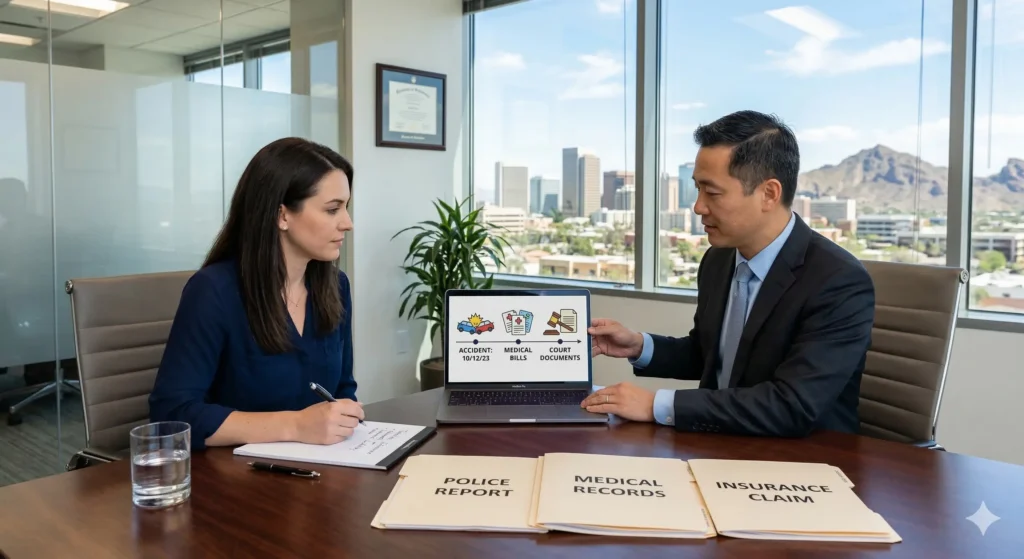
After a self-driving car accident in Phoenix, it is common to feel overwhelmed by contact from multiple insurance companies. You might hear from your own carrier, the insurer for the self-driving vehicle, the insurance company for another driver, or a commercial policy that covers a rideshare or delivery fleet. Each one is focused on limiting what it pays, not on what you truly need to move forward.
A Phoenix self-driving car accident lawyer from Impact Legal can step between you and these companies, organize the claims process, and work to protect your rights at every stage.
Why Self-Driving Crashes Often Involve Several Insurers
Unlike a standard two car crash, autonomous vehicle collisions may involve a mix of:
- A personal auto policy for a human driver
- A commercial policy for a testing company, rideshare, or delivery service
- Excess or umbrella coverage for a parent corporation
- Property damage coverage for your vehicle
- Health insurance that later seeks reimbursement
Each policy has its own limits, exclusions, and procedures. The way these policies interact can affect how much money is available and how long the process takes. When Impact Legal evaluates your claim, we look for every potential source of coverage and build a plan that keeps your overall recovery in mind.
Common Insurance Tactics after a Self Driving Car Accident
Insurance companies often rely on similar strategies, whether the vehicle is fully autonomous or only partially automated. These tactics can be especially confusing when several carriers are involved at once. You may see:
- Quick, low settlement offers: An adjuster might offer a small payment soon after the crash while you are still in pain and do not know the full extent of your injuries. Once you sign, you usually cannot ask for more, even if you later need surgery or long term care.
- Requests for recorded statements: Adjusters like to ask detailed questions on a recorded line. They may later use your comments out of context to argue that you were not hurt, that your symptoms are minor, or that you share most of the fault.
- Broad medical authorizations: Some insurers send forms that would let them dig through years of your medical history. They may use old injuries or conditions to claim that the crash did not cause your current problems.
- Blame shifting: When autonomous technology is involved, insurers may argue that another company, another driver, or even you should bear most of the responsibility. The goal is simple: reduce what they have to pay.
Working with a Phoenix self-driving car accident lawyer helps you avoid mistakes that can harm your claim. Impact Legal can respond to adjusters, control the flow of information, and prevent you from being pressured into decisions that are not in your best interest.
How Impact Legal Handles Communication for You
Once you hire Impact Legal, we typically notify all relevant insurers that you are represented. From that point forward, they should contact your legal team rather than calling you directly. This change alone often brings a sense of relief.
Your lawyer and support staff will then:
- Gather policy information and coverage limits
- Provide necessary details without volunteering information that could be twisted against you
- Coordinate property damage claims and rental car issues when possible
- Track deadlines so that no required notices or filings are missed
You still have the final say on major decisions, but you no longer have to manage constant calls and letters on your own.
Building a Strong Settlement Demand
A fair settlement does not start with a number pulled out of thin air. It is built from evidence. After investigating liability and documenting your injuries, your Phoenix self-driving car accident lawyer prepares a detailed demand package that may include:
- A clear summary of how the crash occurred and who is responsible
- Police reports, witness statements, and any available self-driving data
- Medical records, bills, and expert opinions on future care
- Proof of lost income and reduced earning capacity
- Information about pain, limitations, and how the accident affected your daily life
This package gives insurers a full picture of your losses. It also signals that your case has been carefully prepared and will not be resolved for a token amount.
Negotiation and the Possibility of Litigation
Many claims resolve through negotiation once insurers see that your lawyer is ready to present strong evidence. During this phase, Impact Legal:
- Reviews each offer and explains its strengths and weaknesses
- Advises you on whether the offer reflects your current and future needs
- Continues to gather information where needed to strengthen your position
If carriers refuse to act reasonably, filing a lawsuit may be the next step. Litigation does not mean an immediate trial, but it does open powerful tools such as depositions and subpoenas that can help uncover internal company information. Insurers know this, which is one reason why a strong willingness to litigate often leads to better settlement discussions.
Protecting Your Net Recovery
A successful settlement or verdict is only part of the picture. Your lawyer also looks at issues that affect how much you actually keep. That can include:
- Health insurance reimbursement claims
- Liens from medical providers
- Coordination between different insurance policies
Impact Legal works to address these matters as part of the overall strategy, with the goal of leaving you in the best possible position once your case resolves.
When you do not have to carry the burden of dealing with insurance companies alone, you can focus on healing and on your family.
Talk with a Phoenix Self-Driving Car Accident Lawyer Today
A self-driving car accident can turn a normal day in Phoenix into months of pain, confusion, and financial stress. You may be worried about medical bills, missed paychecks, and how to deal with technology companies and insurers that seem to speak their own language. You do not have to figure it out alone.
Impact Legal Car Accident Attorneys focuses on helping injured people, not corporations. When a self-driving or partially automated vehicle harms you or someone in your family, our role is to stand between you and the companies that want to limit what they pay. We take the time to understand what happened, how it changed your life, and what kind of result would actually help you move forward.
What Happens When You Contact Impact Legal
Reaching out is simple. You can call our office or fill out a short contact form to schedule a free consultation. During that first conversation, a Phoenix self-driving car accident lawyer will:
- Listen to your story and answer your questions
- Review the basic facts about the crash and your injuries
- Explain how Arizona personal injury law applies to your situation
- Outline possible next steps so you know what to expect
There is no charge for this meeting and no pressure to sign anything. The goal is to give you clear, practical information so you can decide what is right for you and your family.
Why Local Experience Matters
Phoenix is not just another dot on a map for Impact Legal. Our attorneys understand the traffic patterns, growth, and road conditions that shape daily driving across the Valley. We know where self-driving vehicles commonly operate, how local weather can affect sensors, and how quickly congestion can build on major routes.
That local insight helps us:
- Ask better questions about how your crash happened
- Recognize patterns in how self-driving fleets behave in certain areas
- Explain your case to judges, juries, and adjusters who live and work in the same communities
When your lawyer understands the realities of Phoenix roads, it becomes easier to tell a clear, believable story about what you faced in the moments before impact.
Take the Next Step Today
If a self-driving car or automated vehicle injured you in Phoenix or anywhere in Arizona, you deserve focused legal help. Impact Legal Car Accident Attorneys is ready to review your situation, explain your options, and take on the work of dealing with insurers and corporate defendants while you focus on healing.
Call Impact Legal today or reach out through our online contact form to schedule your free consultation with a Phoenix self-driving car accident lawyer. We are here to listen, to stand up for you, and to pursue the financial recovery the law allows for the harm you have suffered.
