
Call For A Free Consultation(602) 345-1818Free Case Review
 Fighting Suits,
 Stories, animation and community. Created by Impact Legal.
Updated January 2026 by Jared J. Pehrson
If you were hit on a bike in Phoenix, you already know the deck is stacked. Cars don’t see you. The adjuster assumes you were speeding or splitting lanes. Your injuries are worse than any car occupant’s would have been from the same impact. This page is a straight-answer guide to how a Phoenix motorcycle accident lawyer handles your claim under Arizona law, what the insurance company will try, and how case value actually gets built.
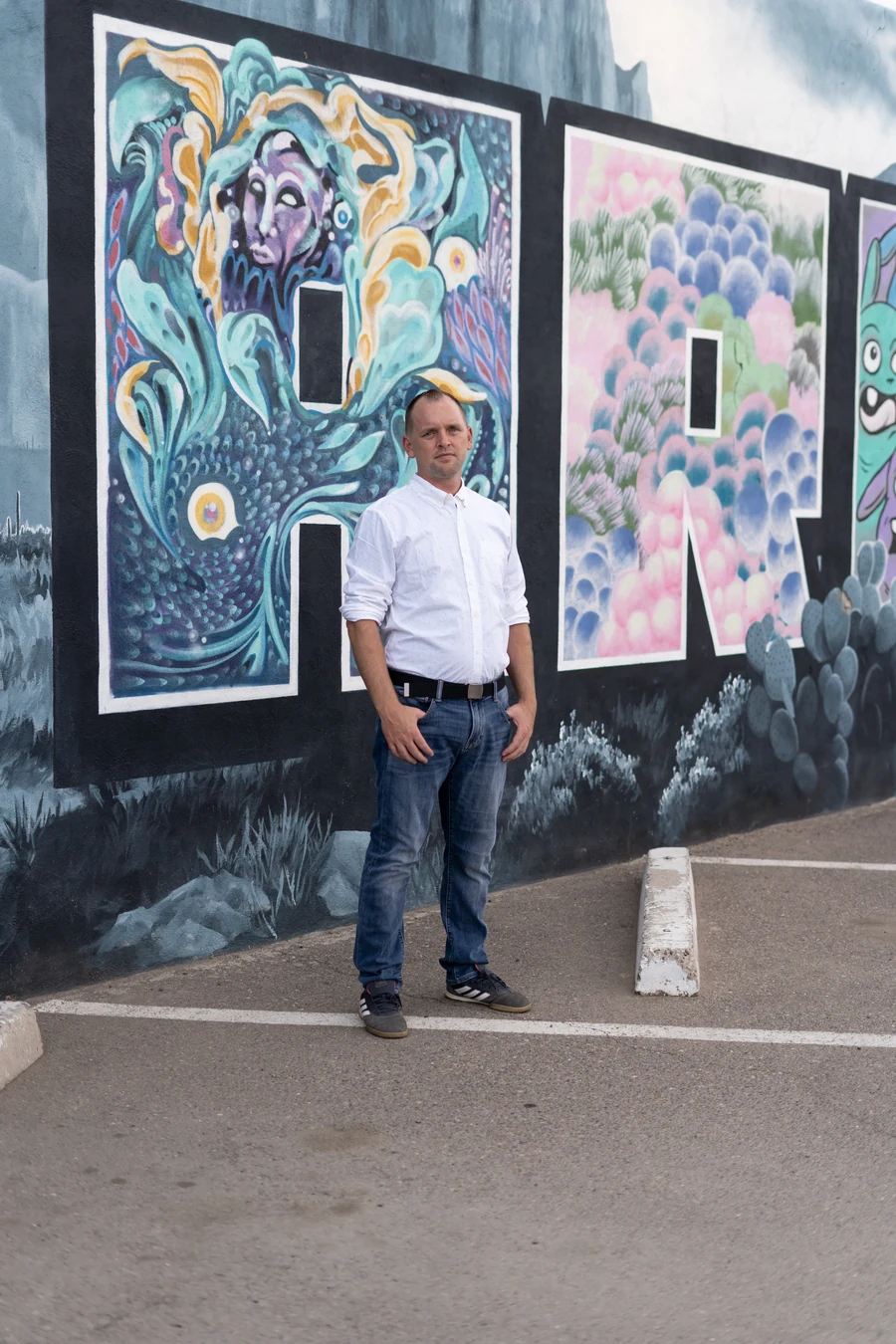
We’re Impact Legal Car Accident Attorneys. Jared J. Pehrson handles motorcycle cases personally. Free case review, 24/7: (602) 345-1818.
Motorcycle claims aren’t car claims with a different vehicle. They come with built-in bias. Adjusters, jurors, and even some police officers assume the rider was doing something reckless. That assumption shows up in the first settlement offer and it shows up in the fault percentage assigned in the crash report.
A Phoenix motorcycle accident lawyer’s job on your file looks like this:
You don’t have to hire us to get straight answers. Call and ask. We’ll tell you honestly whether you need a lawyer.
Three areas of Arizona law come up in almost every motorcycle case we handle. Adjusters use them against riders. Knowing what they actually say matters.
Arizona only requires helmets for riders and passengers under 18. If you’re an adult, riding without a helmet is legal. That matters because insurance adjusters routinely try to use “no helmet” as a reason to slash a head-injury claim.
Here’s what most people don’t realize: your choice not to wear a helmet didn’t cause the collision, so it’s not a comparative fault issue on liability for the crash itself. It can become an issue on damages for head injuries specifically, and that’s a fact-and-law analysis that depends on the case, the injury, and the evidence. If an adjuster is telling you your claim is worth less because you weren’t wearing a helmet, get a second opinion before you accept that framing.
Arizona legalized limited lane filtering in 2022. Under the statute, riders on two-wheeled motorcycles may pass stopped vehicles between lanes at intersections when the posted speed is 45 mph or less and the rider is going no faster than 15 mph. That’s filtering, not splitting. Full lane splitting (moving between lanes at highway speeds) is still illegal in Arizona.
Insurance adjusters conflate the two. If you were lane filtering within the conditions the statute allows, that’s protected conduct, not automatic comparative fault. We’ve seen adjusters try to assign large fault percentages to riders who did nothing outside what the law permits. Those percentages should not survive a real legal challenge.
A.R.S. § 28-772 addresses the duty of a driver making a left turn to yield to oncoming traffic that is close enough to constitute an immediate hazard. When a driver making a left turn collides with an oncoming vehicle that has the right of way, the turning driver is typically at fault. This is the single most common fatal-collision pattern for motorcyclists nationwide, and Arizona’s right-of-way statute is where the analysis lives.
The defense you’ll hear: “I didn’t see the motorcycle.” That’s not a defense to a failure-to-yield claim. Failure to see a vehicle you’re required to yield to is failure to yield. Named in the crash report or not, the physics and the statute usually put fault on the turning driver.
NHTSA traffic safety data consistently shows motorcyclists are far more likely than car occupants to die in a crash per vehicle mile traveled. Recent NHTSA figures have placed that fatality rate at roughly 24 to 28 times higher than passenger car occupants, depending on the reporting year. Non-fatal injury severity follows the same pattern. There’s no crumple zone, no airbag, no seatbelt, and no steel cage. The rider’s body absorbs the energy directly.
That severity is why insurance companies fight motorcycle claims harder. The exposure is bigger. A T-bone at 35 mph in a sedan is often a whiplash claim. The same crash on a bike can mean a broken pelvis, a shoulder reconstruction, and a long rehab plan.
We handle Phoenix motorcycle injury cases involving:
Case value moves so much between motorcycle and car claims because of medical cost. A rider with a comminuted tibia fracture, plate and screws, and 18 months of physical therapy is looking at a very different damages picture than a rear-end whiplash in a sedan.
Every part of Maricopa County has its own crash pattern. If you ride here, you already know these roads. If you’re an out-of-state adjuster reading a claim from Ohio, you don’t.
Loop 101 (Agua Fria, Pima, Price): High-speed lane changes, semi traffic, and merge chokepoints near Bell Road and Shea generate a disproportionate share of serious motorcycle wrecks in the West Valley and Scottsdale corridor.
I-10 Stack and Mini-Stack: The interchange complex where I-10, I-17, SR-51, and Loop 202 converge is one of the crash-heavier stretches in the state. Merging vehicles, afternoon sun glare westbound, and abrupt lane drops make it dangerous for riders.
US-60 (Superstition Freeway): Heavy East Valley commuter traffic through Tempe, Mesa, and Apache Junction. Left-turn collisions at surface-street exits are common.
Camelback Road, Indian School, McDowell: Surface-street left-turn crashes across midtown Phoenix, often at intersections with sightlines blocked by parked trucks or landscaping.
Grand Avenue: Diagonal intersections and angled cross-traffic make it a hot spot for right-of-way violations against riders.
Cave Creek Road and Bell Road, North Phoenix: Weekend rider corridor, higher speeds, and left-turning traffic pulling out of retail lots.
Location matters for two reasons. First, some of these roads are patrolled by DPS rather than Phoenix PD, which changes how you get the crash report. Second, several are maintained by ADOT rather than the City of Phoenix, which matters for road-defect claims and the 180-day government notice rule (see below).
Within 24 to 72 hours of the crash, the other driver’s insurance carrier will call you. They’ll be friendly. They’ll say they just want to get your side of the story so they can process the claim quickly.
Don’t give a recorded statement. Not yet.
Here’s why. Adjusters are trained to ask questions that sound harmless but produce quotable material. “How are you feeling today?” becomes “claimant states he is feeling okay” in the file. Three weeks later, when the MRI comes back showing a herniated disc, that quote gets used to argue you exaggerated. “How fast were you going?” becomes an admission if you’re off by five mph from the police estimate. “Did you see the car before it turned?” is designed to shift fault to you regardless of how you answer.
What the adjuster will also do:
Your options: get the adjuster’s name and direct line, tell them you’ll respond after getting legal guidance, and don’t sign anything. Then call us. (602) 345-1818. Free case review.
To recover in Arizona, you have to prove negligence. Four elements:
The first and fourth are usually easy. Every driver owes every other road user a duty of reasonable care. If you’re hurt, you have damages. The fight is almost always over element two (breach) and element three (causation), because that’s where the biker-bias defense lives.
Evidence we pull on motorcycle cases:
The biker-bias defense often sounds like: “The motorcycle came out of nowhere.” That’s rarely true. Reconstructions show the driver had 3 to 5 seconds of sightline in most left-turn cases. That’s not “out of nowhere.” That’s failure to look. When we can show sightline, speed, and reaction time, the “invisible motorcycle” defense collapses.
Arizona follows pure comparative negligence under A.R.S. § 12-2505. That works in your favor compared to most states.
Here’s how it works. A jury (or, in settlement, the adjuster) assigns a percentage of fault to each party. Your recovery is reduced by your percentage.
Worked example: your total documented damages come to $100,000. The jury finds you 30% at fault because you were going 5 mph over the limit when a car turned left in front of you. Your recovery equals $100,000 minus 30%, or $70,000. That’s an illustration of how the math works under the statute, not a prediction of what your case will settle for.
The unique piece of Arizona law: there is no cutoff. In many states, if you’re more than 50% at fault, you recover nothing. In Arizona under A.R.S. § 12-2505(A), a plaintiff can be 99% at fault and still recover 1% of their damages. That means the “we think you’re mostly at fault” adjuster tactic is not a case-killer here the way it is in half-fault-bar states. You still have a claim worth pursuing.
What actually drives your fault percentage:
Arguing down your fault percentage is one of the highest-leverage things a Phoenix motorcycle accident lawyer does on your case. Every percentage point off your fault assignment translates directly into more of your damages being recoverable.
Two categories under Arizona law: economic damages (the ones with receipts) and non-economic damages (the ones without).
Economic damages:
Non-economic damages:
Punitive damages are available in Arizona when the defendant acted with an “evil mind” or extreme disregard for safety. Drunk drivers and drivers who fled the scene are the two most common punitive-damages defendants in motorcycle cases we see.
We don’t publish average settlement ranges for motorcycle claims because case value depends on injury severity, treatment history, liability proof, available insurance limits, and how well damages are documented. If someone quotes you a specific number without seeing your medical records and the crash report, they’re guessing. Get a real case review and real numbers.
Two years from the date of the crash to file a personal injury lawsuit. That’s A.R.S. § 12-542. Miss it, and your claim is gone, no matter how strong the liability picture is. This is the Arizona statute of limitations for personal injury.
Two important exceptions:
Government defendants. If your crash involves a city vehicle, a state truck, a bus, or a road-defect claim against a public entity, you must file a written notice of claim within 180 days under A.R.S. § 12-821.01, not two years. Miss the 180-day window and you’re barred even if you’re inside the two-year lawsuit deadline.
Minor victims. If the injured rider is under 18, the statute of limitations clock generally doesn’t start running until they turn 18. That said, don’t wait. Evidence disappears, witnesses move, and camera footage cycles off within weeks.
The practical rule: talk to a lawyer within days, not months. Getting a claim on file with the insurance company doesn’t stop the statute of limitations. Filing suit does.
The Arizona Department of Transportation publishes an annual Crash Facts report tracking motorcycle collisions statewide. The most recent published data shows motorcycle crashes numbering in the low thousands each year, with roughly three-quarters causing at least one injury and hundreds resulting in fatalities. Maricopa County consistently accounts for the majority of those crashes because it’s the largest metro area in the state. Exact yearly figures should be verified against the current ADOT Crash Facts publication for the most recent reporting year.
The pattern behind the numbers is consistent year over year: left-turn collisions, failure-to-yield violations by drivers of larger vehicles, and rear-end impacts on freeway on-ramps. Rider-caused single-vehicle crashes exist, but the majority of serious injury motorcycle wrecks involve a second vehicle whose driver violated a right-of-way rule.
We work on a contingency fee. No hourly bills, nothing upfront. Our fee is a percentage of the recovery, and there is no attorney’s fee unless we recover for you. Case costs and the exact fee terms are set out in the written agreement, which we walk through with you before you sign. If any of it is unclear, we’ll explain it in plain English.
We’re a boutique firm. Jared J. Pehrson works directly on the cases we take, and clients call the attorney handling the file, not a case manager three layers deep. That’s a deliberate choice. Motorcycle cases require attention. Reconstruction takes attention. Fighting biker bias takes attention. We’d rather take fewer cases and work them harder than run a volume operation.
If you want a firm that knows what your case is worth and doesn’t hand you off, that’s what we do.
Yes. Arizona only requires helmets for riders under 18 under A.R.S. § 28-964. Adult riders can legally ride without one. Helmet non-use didn’t cause the collision, so it isn’t automatic comparative fault on the crash itself. It can factor into a damages analysis on head injuries specifically, but that’s fact-and-law dependent and it doesn’t kill your claim.
Full lane splitting (moving between lanes at speed) is illegal. Lane filtering, meaning passing stopped traffic between lanes at intersections at 15 mph or less on roads posted 45 mph or less, became legal under the 2022 Arizona amendment. If you were filtering within those conditions, that’s legal conduct, not comparative fault.
No. Not before talking to an attorney. Recorded statements are used to lock you into a version of events before you know the full extent of your injuries, and they get quoted back at you months later. Get the adjuster’s name, tell them you’ll respond after getting legal guidance, and call us.
No. The crash report is one piece of evidence and it’s often wrong on motorcycle cases. Officers arrive after the crash, take statements from whoever is conscious, and issue an opinion. Reconstruction, video, and witness testimony frequently contradict the initial fault call. Fault assignments in crash reports can be challenged with additional evidence.
Case value depends on injury severity, medical treatment (past and future), lost income, liability proof, and available insurance coverage. We don’t quote numbers without seeing the records. A free case review is the fastest way to get real information about your specific claim.
A few months for straightforward liability cases with clear damages. A year or more if liability is disputed, if injuries are still being treated, or if the case has to be filed and litigated. We don’t rush cases to settle for less than they’re worth, but we also don’t drag them out.
Your own uninsured/underinsured motorist (UM/UIM) coverage may pay. If you have UM coverage on your motorcycle policy, or on any household auto policy, every available layer of coverage should be evaluated. Don’t assume no insurance means no recovery until an attorney has reviewed the policies.
Yes. Arizona is a pure comparative negligence state under A.R.S. § 12-2505. Even at 99% fault, a plaintiff can recover 1% of their damages. Your recovery is reduced by your percentage of fault, but a partial-fault finding does not bar the claim.
If you were hit on your bike in Phoenix, the sooner you get an attorney involved, the more evidence we can preserve and the harder it is for the other side to build a biker-bias defense. Camera footage cycles off. Witnesses forget. Adjusters push for early recorded statements. Every day matters.
Free case review, 24/7. We’ll tell you what your case looks like, what your options are, and whether hiring a lawyer even makes sense in your situation. No pressure.
(602) 345-1818
Impact Legal Car Accident Attorneys
16202 N Cave Creek Rd Suite D, Phoenix, AZ 85032
(602) 345-1818
By Jared J. Pehrson | Impact Legal Car Accident Attorneys